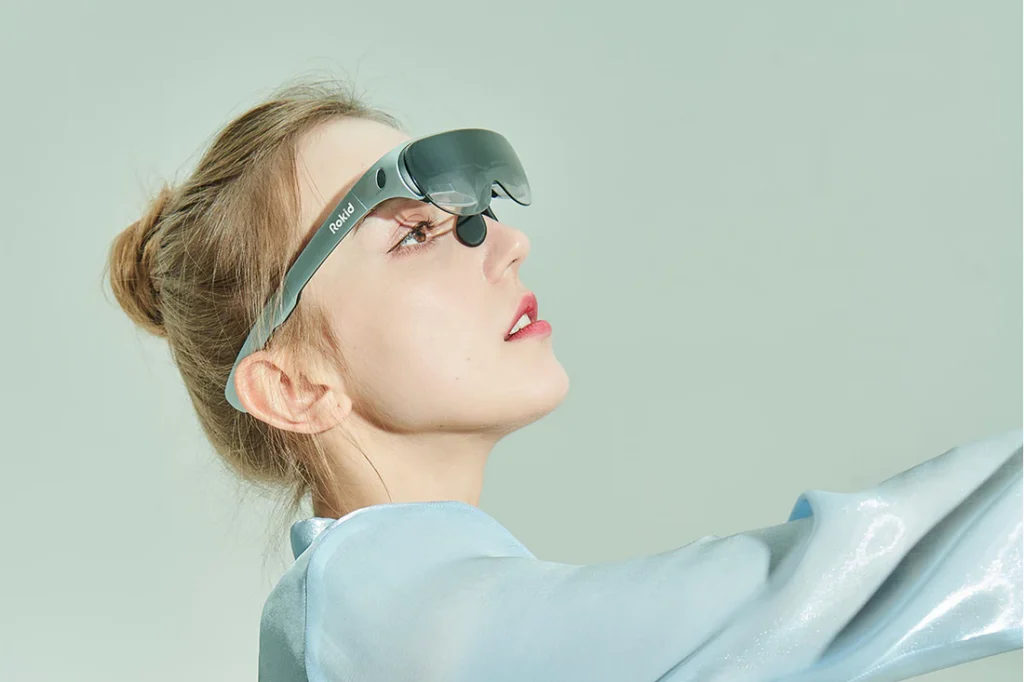
Augmented reality (AR) is no longer futuristic—it’s actively changing how we engage with the world. From virtual try-ons in retail to real-time fitness tracking, AR enhances both daily life and professional workflows. Imagine trying on a jacket without leaving your living room, monitoring your run through smart glasses, or following step-by-step assembly instructions projected onto your workbench. AR overlays digital information onto reality, creating experiences that are instant, interactive, and personal.
Immersive Technologies on the Rise
AR and edge computing aren’t concepts for tomorrow—they’re here today, reshaping interactions with digital content. By combining virtual overlays with edge-based data processing, experiences become immediate, immersive, and tailored to each user.
According to Deloitte Tech Trends, spatial computing paired with AI and emerging “quantum math” frameworks is unlocking new levels of interaction. From immersive workplaces to interactive retail, this fusion redefines productivity, creativity, and engagement, offering futuristic applications that feel surprisingly accessible.
AR in Action: Retail, Fitness, and Beyond
Virtual try-ons are among the most visible AR applications. Companies like Zyler, Obsess, and L’Oreal let users see clothing, accessories, or cosmetics in real time before purchasing. Preparing for a meeting? Instantly visualize a jacket or shoes—no trip outside needed.
Fitness also benefits. Smart glasses and AR-enabled devices display heart rate, pace, and route metrics in real time. Professional training environments report higher engagement, precise tracking, and faster results, proving that AR is more than a novelty—it’s a performance tool.
Edge computing is crucial here. By processing data near the user instead of relying solely on the cloud, latency is minimized, enabling real-time feedback essential for both personal and professional applications.
Driving the AR and Edge Revolution
Tech giants and startups are pushing AR and edge computing forward. Microsoft HoloLens 2 helps engineers visualize schematics directly in the workspace. Niantic, creator of Pokémon GO, blends outdoor exploration with interactive gameplay. Magic Leap partners with healthcare and enterprise clients for AR visualizations in surgery and assembly tasks.
Infrastructure initiatives like AWS Wavelength and Azure Edge Zones bring low-latency computing closer to users, powering instantaneous AR interactions for commercial, industrial, and fitness applications. Together, these efforts make immersive technology both functional and seamlessly integrated into everyday life.
Entrepreneurs Share Their Vision
Industry leaders are optimistic. Satya Nadella calls AR and edge computing “the next interface for human productivity,” highlighting their role in transforming collaboration. Niantic’s John Hanke emphasizes that “the real world is our platform,” with immersive technology unlocking new experiences in gaming and professional work.
Startup founders stress personalization, speed, and context-aware computing as keys to mainstream adoption. Early users already enjoy enhanced learning, performance tracking, and shopping interactions that feel natural, showing the transformative potential of these technologies.
Industry Impact
AR and edge computing are strategically transforming industries. Retailers reduce returns and increase engagement with virtual try-ons. Surgeons and medical students rely on AR overlays for precision and faster training. Manufacturing sees streamlined assembly and fewer errors, boosting efficiency. Fitness enthusiasts receive immediate feedback, improving performance and motivation.
Organizations embracing these technologies gain competitive advantages, streamlined operations, and new revenue streams. AR and edge computing drive efficiency, engagement, and smarter decision-making across sectors.
Looking Ahead: A Seamless Digital Future
As AR and edge computing mature, applications expand dramatically. Fully interactive remote workspaces, immersive classrooms, and AI-integrated fitness platforms are on the horizon.
Experts predict that spatial computing, low-latency edge processing, and AI-driven personalization will merge digital and physical realities. Users won’t just view information—they’ll interact with it instantly and intuitively, whether for work, education, or personal use.
Ultimately, AR and edge computing empower individuals, enhance productivity, and democratize experiences once reserved for specialists or high-end environments. From retail and fitness to healthcare and industrial workflows, these technologies are reshaping everyday and professional life. Industry leaders agree: this is only the beginning. As devices, infrastructure, and software evolve, AR and edge computing will become essential tools for engagement, innovation, and seamless integration of digital and physical realities.
Keywords: augmented reality, AR technology, edge computing, immersive technology, AR in retail, virtual try-on, AR fitness applications, real-time data overlay, spatial computing, immersive digital experiences